The Right Automation for Your Front Desk: Less Typing, More Hospitality

Gustavo Marval
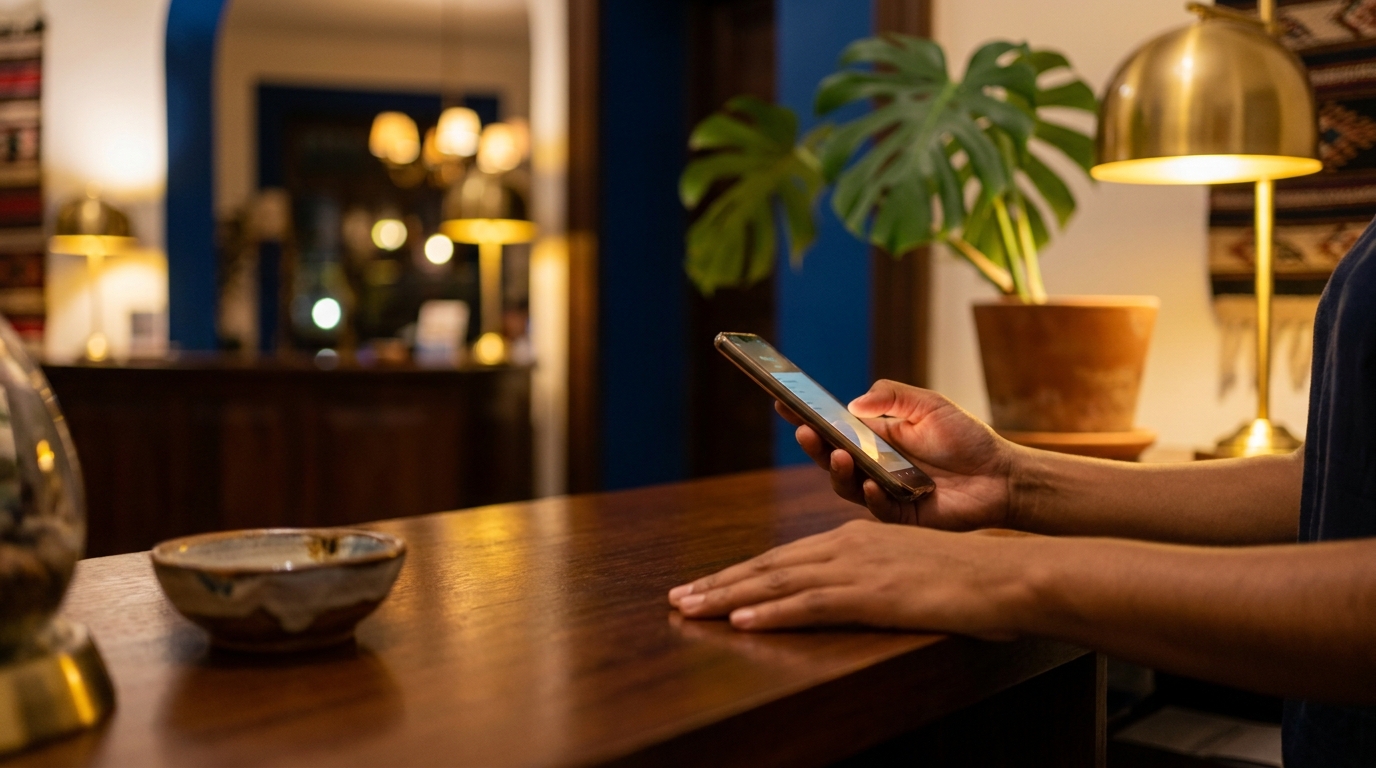
It's 9 PM in Santa Marta. Your night receptionist is handling three chats at once.
One is asking for a quote for a group in two months. Another wants to know if the pool is still open. The third wants to know if they can use a local payment app to pay for tomorrow's tour. Each answer requires searching a system or asking someone.
The result: an average response time of eight minutes. In that time, the impatient traveler has already gotten quotes from three other hotels. The sale goes cold, not from lack of interest, but from friction.
The False Dilemma: Efficiency vs. Warmth
Instinct tells us that automating the front desk dehumanizes service. We think the problem is not having enough hands to respond quickly and personally.
But the real problem is the sequence. We try to automate the conversation when we should be automating the repetitive tasks that interrupt it. The goal isn't to replace your receptionist; it's to give them superpowers.
True warmth isn't typing "hello, how are you?" every time. It's solving the guest's need instantly and accurately, freeing up your team to handle complex cases, exceptions, and upselling opportunities a machine can't see.
Tactic 1: Automate the Task, Not the Relationship
The first step isn't to install a chatbot that pretends to be human. It's to identify the five questions your team answers manually dozens of times a day.
"Do you have availability for July 15th?", "What's the price?", "Are you pet-friendly?", "How do I get there from the bus terminal?", "What's the Wi-Fi password?". These are tasks, not conversations.
An automated flow can answer these in a second. The key is that the system doesn't try to close the sale on its own. Its job is to deliver the hard data (availability, price, policies) immediately. HotelChatBook, for instance, connects to your PMS to provide real-time availability and rates, all within WhatsApp.
Once the guest has the information, your team enters the conversation in a higher-value role. Not as an order-taker, but as a local host. The bot manages the transaction; the human builds the relationship. It's about qualifying guest intent before investing human time.
Tactic 2: The Uninterrupted Quote-and-Pay Flow
The point of greatest friction in hotel WhatsApp direct bookings is the quote and payment moment. The manual process usually looks like this: guest asks, receptionist checks the PMS, calculates the rate, types it out, waits for confirmation, sends bank transfer details, and waits for a screenshot.
Every step is an opportunity for abandonment. A smart automation system manages this flow without pauses. When a guest asks for a quote, the system responds with an interactive calendar or simply asks for their dates.
With the dates, it checks inventory and presents available rooms with their final rates. If the guest confirms, the system immediately generates a secure payment link. This transforms your WhatsApp from a simple chat into a conversational booking engine that closes the sale instantly, delivering commission-free direct bookings.
Tactic 3: Proactive Communications that Reduce Anxiety
Automation doesn't end with the payment. Its greatest, often overlooked, value lies in the post-booking and pre-arrival phase. This is where warmth feels most genuine.
Instead of waiting for the guest to ask, you can schedule helpful, automated messages. A week out: "Hi [Name]! We're getting ready for your arrival in Santa Marta. Here's the weather forecast and a few restaurant recommendations near the hotel."
A day before: "Your room is almost ready. To make your check-in smoother, could you confirm your arrival time? Here's our Google Maps location and the front desk phone number." This kind of communication is not only efficient but also shows care and professionalism, optimizing the customer experience map and reducing no-shows.
The Measurable Impact: From 4 Hours to 15 Minutes
A 12-room hostel in Minca relied on two people to manage WhatsApp. They spent a combined average of 4 hours daily answering queries, quoting, and chasing payment confirmations. Their first-response time was 12 minutes.
They implemented automation focused on these three tactics: FAQ answers, quote-and-pay flow, and pre-arrival reminders. In the first month, the time spent on WhatsApp management dropped to 15 minutes a day, focused only on complex and personalized conversations.
The response time for a quote request became 5 seconds. Direct bookings increased by 22%, not because they had more demand, but because they stopped losing the leads they already had to delays. They became a true Booking.com alternative for their repeat guests.
Your Next Steps This Week
You don't need a complete digital transformation. Start small and focus on the biggest bottleneck.
First, for the next three days, manually log every question that comes into your WhatsApp. Group them by theme. You'll be surprised to find that 80% of conversations are about the same 5-6 things.
Second, define your ideal payment flow. If it still involves manually sending your bank details and waiting for a proof of payment, that's the first task you should automate. The jump in conversion is immediate.
Finally, review how an AI hotel chatbot can handle these tasks without you losing control. Analyze how HotelChatBook can automate the entire booking and payment cycle directly in the chat, freeing up your team to get back to what they do best: being hospitable.