HiJiffy Alternative in LATAM: Why a European Origin Fails at Payments in Colombia or Mexico

Gustavo Marval
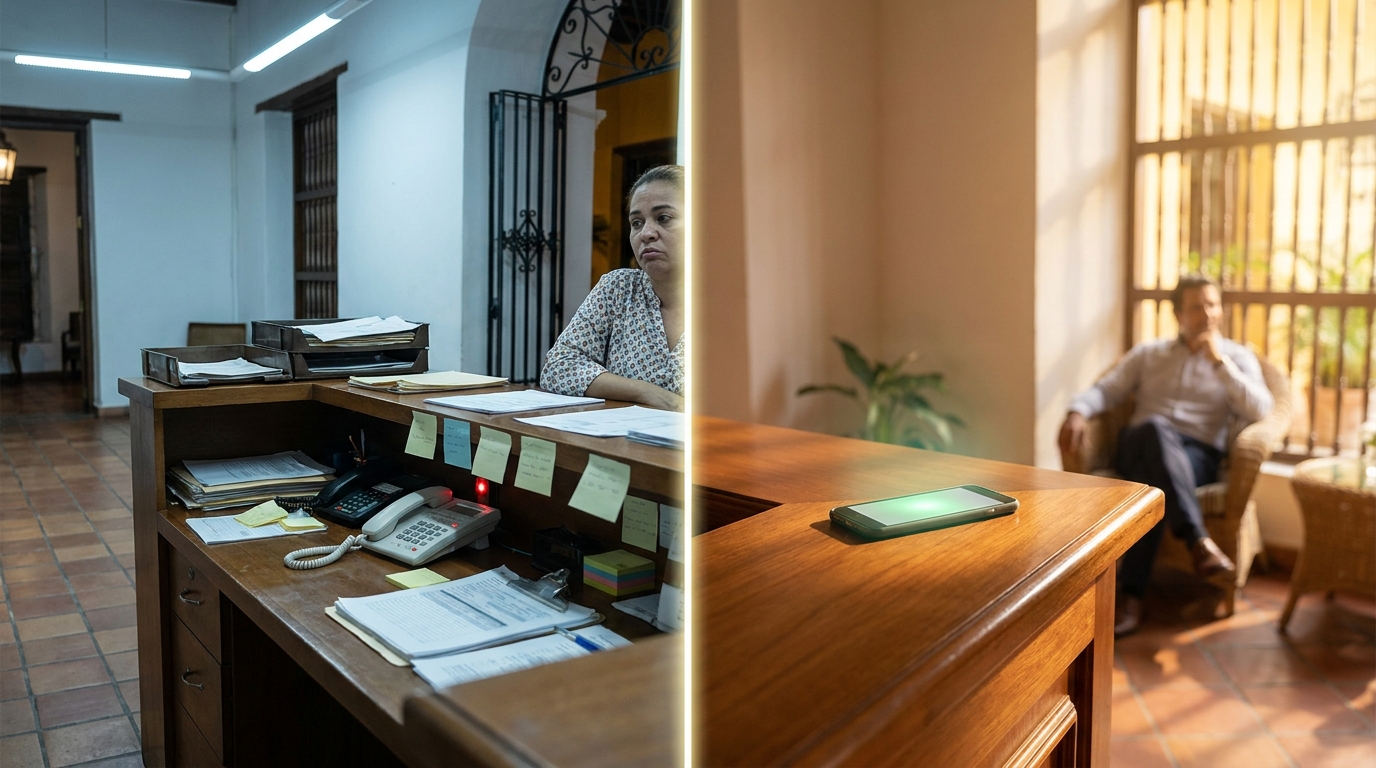
An independent hotelier in Cartagena quotes a rate via WhatsApp. The guest confirms, ready to pay. The front desk agent sends a Stripe link. Silence. An hour later, the guest has booked on Booking.com. This scenario isn't a follow-up failure; it's an infrastructure failure. The chat tool, often European in origin, is perfect for a tourist in Rome but ignores the reality of how people pay in Latin America. The search for a HiJiffy alternative isn't about finding more features, but about finding the right features for the local market.
The problem isn't the lack of automation, but the adoption of automation that hasn't been localized. There's an assumption that a chatbot is a universal solution, when in reality, its effectiveness is 100% tied to its ability to navigate the local ecosystem. Software designed for the European market, where credit card usage and banking penetration are nearly total, fails in an environment like Colombia or Mexico. Here, alternative payment methods are the norm, and trust is built within the messaging channel itself, not outside of it. The real challenge is to close the sale in the same place the conversation started: inside WhatsApp.
Origin Matters: European Architecture vs. LATAM Reality
European platforms like HiJiffy were built with an omnichannel logic for large hotel chains. Their strength lies in integrating multiple touchpoints (web, Messenger, Instagram) into a single dashboard. However, for a boutique hotel in Mexico, 90% of the conversations that matter happen in one place: WhatsApp. The omnichannel approach adds a layer of complexity and cost that doesn't translate into more bookings. These tools often treat WhatsApp as just another channel, not as the primary channel. The result is a flow that constantly tries to pull the user out of WhatsApp and into a web form or an external payment gateway, creating friction and distrust.
In contrast, a solution designed for LATAM starts from the opposite premise: the entire guest journey, from inquiry to payment, must occur natively within WhatsApp. This directly impacts the software's architecture. Instead of being a web widget adapted for messaging, it's a native WhatsApp booking engine. This not only improves conversion but also aligns with local user behavior, as they expect to resolve everything without leaving their trusted app. Any discussion about a comparison of an Asksuite alternative or a HiJiffy alternative must center on this fundamental architectural difference.
The Moment of Truth: A Hotel Chatbot with WhatsApp Payments
This is where most European solutions fail in Latin America. The payment infrastructure is radically different. Sending a Stripe or PayPal link to a guest in Colombia who wants to pay via PSE, or to one in Mexico who prefers to pay at an OXXO, is the equivalent of offering no payment option at all. The booking is almost guaranteed to be abandoned. The reliance on these global gateways ignores the fragmentation and local preferences that define commerce in the region.
A hotel chatbot with WhatsApp payments designed for this market must have native integrations with local gateways. This means the bot can generate a Mercado Pago payment link, a PSE code, or an Efecty reference directly in the chat. The HotelChatBook platform, for instance, manages this flow without redirecting the guest to an unfamiliar, external process. This ability to complete the transaction with familiar payment methods is perhaps the most critical feature that distinguishes a generic tool from a truly adapted solution. The goal is for the guest to feel the process is as easy and secure as sending money to a friend.
Technical Support: Time Zone vs. Business Context
Receiving technical support from a provider is crucial, but there are two levels of quality: support in your time zone, and support that understands your business. A European platform can offer Spanish-speaking agents, but they will hardly grasp the complexities of electronic invoicing in Colombia or the challenges of banking informality in Peru. When a hotelier needs help, they aren't just looking for a technical fix, but for contextualized advice.
The difference is significant. A support team in Madrid can resolve a bug at 9 AM Spanish time, but they won't understand why a Bancolombia transfer isn't reflected immediately. A LATAM-based team, on the other hand, knows these peculiarities. This contextual knowledge gap is often underestimated during the purchasing process but becomes a constant point of friction during daily operations. For independent hotels and also for operators looking for a hostel chatbot, having a tech partner that lives and breathes the same commercial environment is a decisive competitive advantage. Exploring strategies for WhatsApp for hotels is more effective with a provider who understands the market.
Head-to-Head: Which HiJiffy Alternative Fits LATAM?
When evaluating a HiJiffy alternative, independent hoteliers in Latin America must prioritize factors that go beyond a long list of features. The key question is: where was this tool built and for whom? The answer to that question predicts its performance in the local market.
- Onboarding Complexity: Platforms like HiJiffy, designed for corporate IT teams, can take weeks to set up. A LATAM-first solution prioritizes simplicity, allowing a launch in days, not months.
- Channel Focus: HiJiffy is omnichannel with a strong bias toward the web widget. Region-focused alternatives are WhatsApp-native, optimizing every interaction for that specific channel.
- Payment Integration: The difference here is stark. European solutions integrate with global gateways (Stripe, PayPal). Local solutions integrate with Mercado Pago, PayU, Wompi, and enable local bank transfers, reflecting the financial reality of the guests.
- Support Model: Spanish-speaking support on a European schedule versus localized support in the same time zone with deep knowledge of LATAM's business regulations and behaviors.
Understanding this is to grasp the difference between a conversational and a traditional booking engine. It's not just about automating answers, but about automating the revenue flow in a way that local guests expect and trust.
For a hotelier in Latin America, choosing a chatbot is not a technology decision, but a market decision. Ignoring the local context of payments and communication is a recipe for frustration and lost direct bookings. This week, audit your last five WhatsApp conversations that didn't convert and analyze the exact point of friction. It probably wasn't at the quote stage, but at the payment attempt. Then, map the time and steps your team invests to manually confirm a transfer. Finally, consider exploring a tool designed for your reality; platforms like HotelChatBook let you see how WhatsApp hotel reservations are closed natively, adapting to the flow of money and trust of your guests.